Introduction
You have worked hard on your website, but it’s not showing up on search engines. This can be frustrating, but it’s important to know that there are many reasons why a website might not be getting indexed. In this article, we will discuss the most common reasons why a website might not be getting indexed.
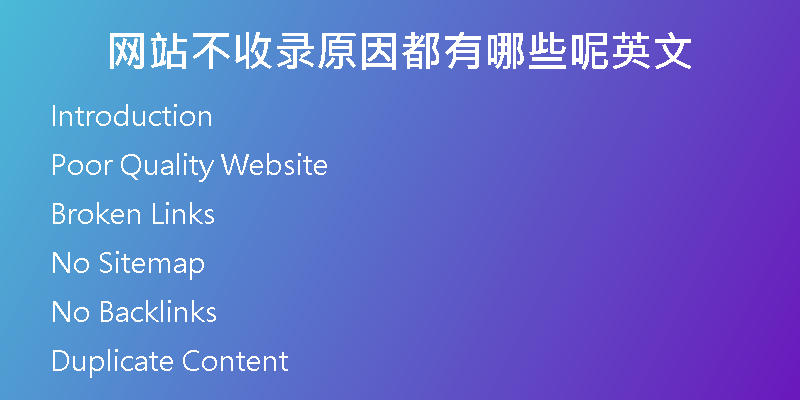
Poor Quality Website
The first reason why a website might not be getting indexed is that it’s of poor quality. Search engines like Google, Bing, and Yahoo prefer high-quality websites that are user-friendly and provide valuable content. If your website is not well-structured, slow to load, or contains low-quality content, it’s likely that search engines will not want to index it.
Broken Links
Broken links are another reason why a website might not be getting indexed. Search engines use a web spider to crawl through your website’s links to find new pages to index. If there are broken links on your website, the spider will stop crawling and won’t be able to find any new pages to index. Make sure to fix any broken links on your website to ensure that search engines can crawl it effectively.
No Sitemap
A sitemap is a file that lists all the pages on your website. It’s essential to have a sitemap to help search engines find all the content on your website. Without a sitemap, search engines may miss some pages on your website, resulting in them not being indexed.
No Backlinks
Backlinks are links from other websites to your website. Search engines consider backlinks to be a vote of confidence in your website and will rank it higher in search results. If your website has no backlinks, search engines may assume that it's not valued by other websites and won't want to index it.
Duplicate Content
Duplicate content is another reason why a website might not be getting indexed. Search engines penalize websites that have duplicate content, so it’s important to ensure that all the content on your website is unique. This includes blog posts, product descriptions, and any other written content.
Too Much Flash Content
Flash content has a negative impact on SEO. Search engines struggle to read Flash content and may ignore it altogether. If your website has too much Flash content, search engines may not want to index it.
Not being Mobile-Friendly
With more and more people using their mobile devices to search the web, it’s important to have a mobile-friendly website. Search engines penalize websites that are not mobile-friendly, so if your website is not optimized for mobile, it’s likely that search engines will not want to index it.
No Social Media Presence
Having a social media presence can help to increase your website’s visibility. Search engines consider social media platforms to be authoritative, and having a strong social media presence can help to build your website’s authority. If your website doesn’t have a social media presence, search engines may not consider it to be authoritative and may not want to index it.
Using Black Hat SEO Techniques
Black hat SEO techniques are techniques used to manipulate search engines and boost rankings. These techniques are against search engine guidelines and can result in your website being penalized or even banned. If you are using black hat SEO techniques, it’s likely that search engines will not want to index your website.
No XML Sitemap
Another reason why a website might not be getting indexed is that it doesn't have an XML sitemap. An XML sitemap is a file that lists all the pages on your website and provides metadata about each page. Search engines use this information to crawl your website more efficiently. If your website doesn't have an XML sitemap, search engines may not be able to crawl it effectively, resulting in pages not being indexed.
Using Thin Content
Thin content refers to content that is low quality or doesn't provide value to the user. Search engines penalize websites that have thin content by not indexing them. Make sure to provide high-quality content that is useful and relevant to your website’s audience.
No Relevant Keywords
Keywords are essential for SEO. If your website doesn't contain relevant keywords, search engines won't be able to understand what your website is about, and as a result, won't want to index it. Make sure to include relevant keywords throughout your website’s content.
Not Updating Content Regularly
Search engines prefer websites that are regularly updated with fresh content. If your website has old, outdated content, search engines may not want to index it. Regularly updating your website’s content can help to show search engines that your website is active and valuable to users.
No Meta Tags
Meta tags provide information about your website to search engines. If your website doesn't contain meta tags, search engines won't be able to understand what your website is about and may not want to index it. Make sure to include relevant meta tags on every page of your website.
Not Using Heading Tags Correctly
Heading tags are an important part of SEO. They help search engines understand the structure and hierarchy of your content. If your website is not using heading tags correctly, search engines may not understand the structure of your content and may not want to index it.
No Alt Tags
Alt tags are descriptions of images on your website. Search engines use alt tags to understand what an image is about. If your website doesn't have alt tags, search engines may not be able to understand what images on your website are about, making it harder to index your website.
No Local SEO
If your website is a local business, it's important to have local SEO. This includes having local citations, local keywords, and claiming your Google My Business listing. If your website doesn't have local SEO, it may not be visible to people searching for your business in the local area.
No SSL Certificate
An SSL certificate is essential for website security. It also provides a ranking boost for websites. If your website doesn't have an SSL certificate, search engines may not want to index it, as it's not considered to be secure.
Conclusion
There are many reasons why a website might not be getting indexed. It’s essential to ensure that your website is well-structured, contains high-quality content, and is optimized for search engines. With the help of a professional SEO service provider like Lucky Chain, your website can overcome these indexing challenges and rank higher in search engine results pages, ultimately driving more traffic and generating more leads for your business.